

PCB Manufacturing / Quotation checklist
Two suppliers can price the same Gerber archive differently when one assumes lead-free HASL and the other ENIG, or when “2 oz copper” means different things. The drawings may match while the manufacturing assumptions do not. An accurate PCB quotation needs both the circuit geometry and a clear fabrication specification.
Send one revision-controlled package containing Gerber and drill files, a fabrication drawing or specification, the required stackup, and order quantities. Flag unknowns explicitly. A price based on unresolved assumptions is a budget estimate, not a production release.
1. Build a complete PCB quotation file package
For bare boards, start with the files below. A BOM and pick-and-place file are for assembly costing; they do not replace the PCB fabrication data. If you also need populated boards, use our PCBA quotation file guide.
| File or information | What to include | Why it affects the quote |
|---|---|---|
| Gerber package | All copper layers, solder mask, legend where required, and an unambiguous board outline; identify layer order. | Defines geometry, board area and routing features to review. |
| NC drill and slot data | Units, plated/non-plated identification, finished hole requirements and any blind/buried drill spans. | Hole structures and tolerances affect drilling, plating and process planning. |
| Fabrication drawing / specification | Material, finished board thickness and tolerance, copper, finish, mask, marking and special requirements. | Prevents suppliers choosing different defaults. |
| Stackup and impedance notes | Layer sequence, dielectric construction, copper by layer; impedance targets and tolerances where required. | Defines material selection and electrical constraints. |
| RFQ / order brief | Part number and revision, quantity breaks, single boards or panels, delivery target and destination. | Separates manufacturing price from schedule and logistics assumptions. |
Gerber X2 attributes help identify layer functions, but layer images alone are not a complete fabrication specification. A Gerber Job file can carry non-image information such as material, thickness and finish; include it if your CAD export provides one, and check it against the drawing. Confirm alternative data formats with the supplier. [1]
2. Resolve the specifications that change cost
Material and stackup: “four layers” is not enough
State the laminate grade or required properties and whether an alternative needs approval. Provide the layer sequence, overall thickness and tolerance. For an impedance-controlled design, add the target, tolerance, relevant nets/layers and reference planes. Trace geometry, dielectric thickness and dielectric properties influence impedance; a generic layer count cannot define it. [2]
If the stackup is not fixed, request a proposed construction for engineering approval. Material availability and any nonstandard construction can change the price or schedule. Agree whether trace-width adjustments are permitted rather than letting a quotation silently redefine the design.
Copper: separate starting foil from finished copper
Specify inner and outer layers separately. State whether a value means base foil, nominal finished copper or a required minimum after processing. One ounce per square foot corresponds to approximately 35 µm of nominal copper thickness; it is not, by itself, a guaranteed finished minimum. Plating and material removal change the final result. [3]
Thicker copper also constrains fine spacing because reliable etching requires suitable isolation. It can therefore affect manufacturability as well as material cost. Do not change copper weight for price alone without reviewing current, temperature rise, clearances and impedance. [4]
Surface finish: name the actual process
Specify ENIG, lead-free HASL or another agreed finish. “Lead-free” does not select one process. ENIG provides a relatively planar pad surface; HASL coating height can vary, which matters for some fine-pitch assemblies. Finish choice changes processing and price, but there is no universal cost percentage. See our ENIG vs HASL guide for the selection trade-offs. [5]
Holes, tolerances and special features
Define critical finished hole sizes, plated slots, cut-outs and mechanical tolerances. Identify blind/buried vias, via filling or capping, edge plating and connector requirements if present. Do not leave a press-fit hole requirement to a general drill note. These details can require additional process steps or verification, so obtain a feasibility review. A drill map helps interpretation but does not replace machine-readable drill data. [6]
3. Compare quotations on the same manufacturing scope
Consider an illustrative four-layer RFQ: one offer assumes nominal copper and lead-free HASL; another includes a specified minimum finished outer copper and ENIG. A price difference cannot show which offer is better until those requirements match. The same applies to single-board versus panel quantities.
- Quantity: request separate price breaks and state boards per panel, rails and separation method if fixed.
- Quality and verification: state the required acceptance standard, revision and class where applicable. Agree electrical test, impedance verification and documentation separately; do not assume that one implies the others.
- Schedule and delivery: distinguish fabrication lead time from transit, and confirm when the lead-time clock starts. Ask for tooling/setup, freight and other charges to be identified.
4. Keep incomplete information visible until release
Use a clear archive name such as Controller_RevC_PCB_RFQ.zip, include a file list, and remove obsolete exports. Check layer alignment, outline and drill registration in a viewer. Where notes conflict, resolve them with a revised specification instead of expecting CAM engineering to guess which document wins.
You can begin an enquiry with partial files, dimensions, layer count and known specifications. List the gaps and ask for assumptions to be written into the estimate. Final pricing and manufacturing release should follow confirmation of the complete requirements. Explore PCB fabrication for the service scope.
Common questions
Can Gerber files alone produce a firm quote?
Sometimes a supplier can infer geometry and offer a budget price using stated defaults. A firm, comparable quote still needs agreement on material, stackup, copper, finish, quantity and special requirements.
Do I need native CAD files?
Not necessarily. A consistent manufacturing export and specification are the starting point. Ask which formats are accepted; do not substitute screenshots for fabrication data.
- Ucamco — Gerber Job
- Polar Instruments — Controlled impedance
- Eurocircuits — Copper thickness
- Eurocircuits — Copper and manufacturability
- Eurocircuits — Surface finishes
- Eurocircuits — Mechanical data
References checked 27 October 2026. Examples are illustrative, not customer cases or JEXPCB capability limits. Confirm the applicable specification and file format before production.
Send a quotation package with clear requirements.
Share your available manufacturing files, required quantities and delivery target. Identify unresolved specifications so they can be reviewed before final pricing.
Request a QuoteRelated Articles
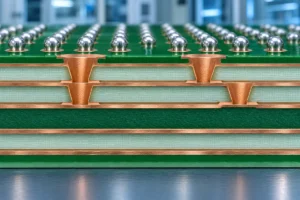
HDI Microvias: Stacked vs Staggered Vias and Sequential Lamination
A practical HDI guide to stacked and staggered microvias, sequential lamination, reliability trade-offs and production-release data.
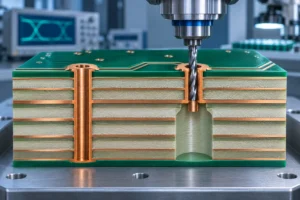
PCB Backdrilling: When Via Stubs Become a Signal-Integrity Risk
A practical engineering guide to via-stub risk, backdrill decisions, manufacturing tolerances and inspection evidence for high-speed PCBs.

PCB Copper Balance: How Uneven Copper Causes Bow, Twist and Assembly Problems
Uneven copper distribution can drive PCB bow, twist, plating variation and assembly instability. Learn what to review before fabrication release.